The day started smoothly, taking the bus back to the HBF (main station) where we got on the direct train to Berlin. Once there we headed over the road to an enormous glass cube building for some lunch, a drink and a planning meeting. From there, I headed out my own for a couple of hours to explore the central area and do a little caching. I walked down to the River Spree and was immediately met with a series of memorials to those who died in their attempts to cross the Wall from 1961 onwards. The story of the DDR, the Wall and the second world war dominate this city and provide a palpable reminder of the horrors that took place on our doorstep, some within my lifetime.
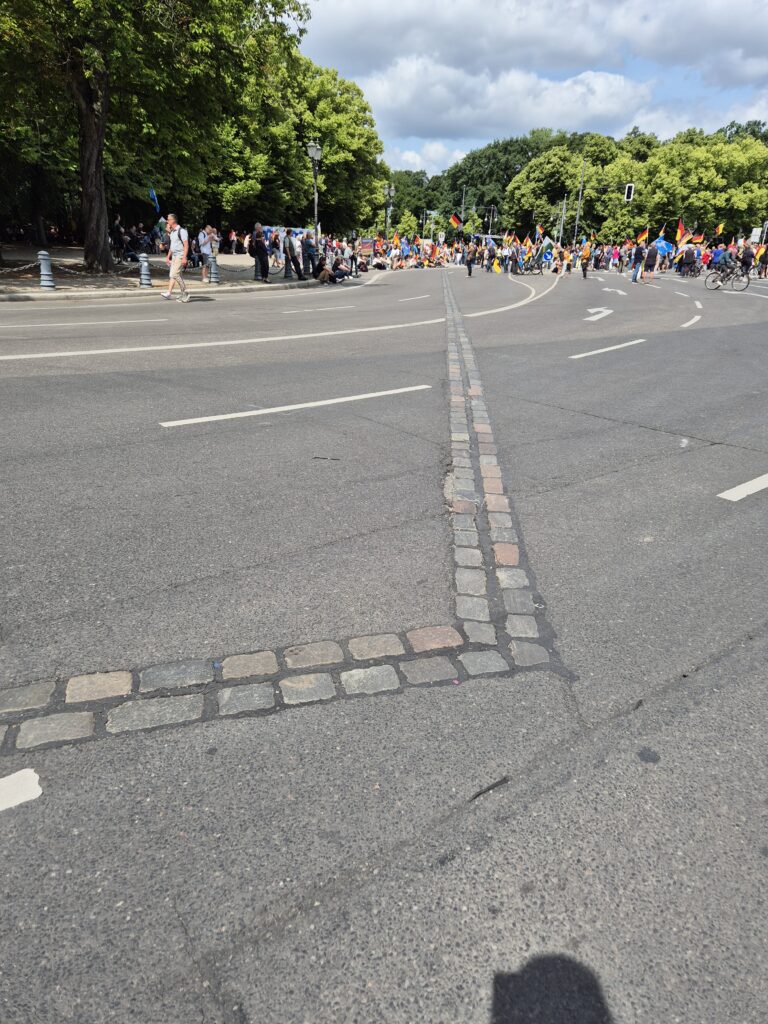
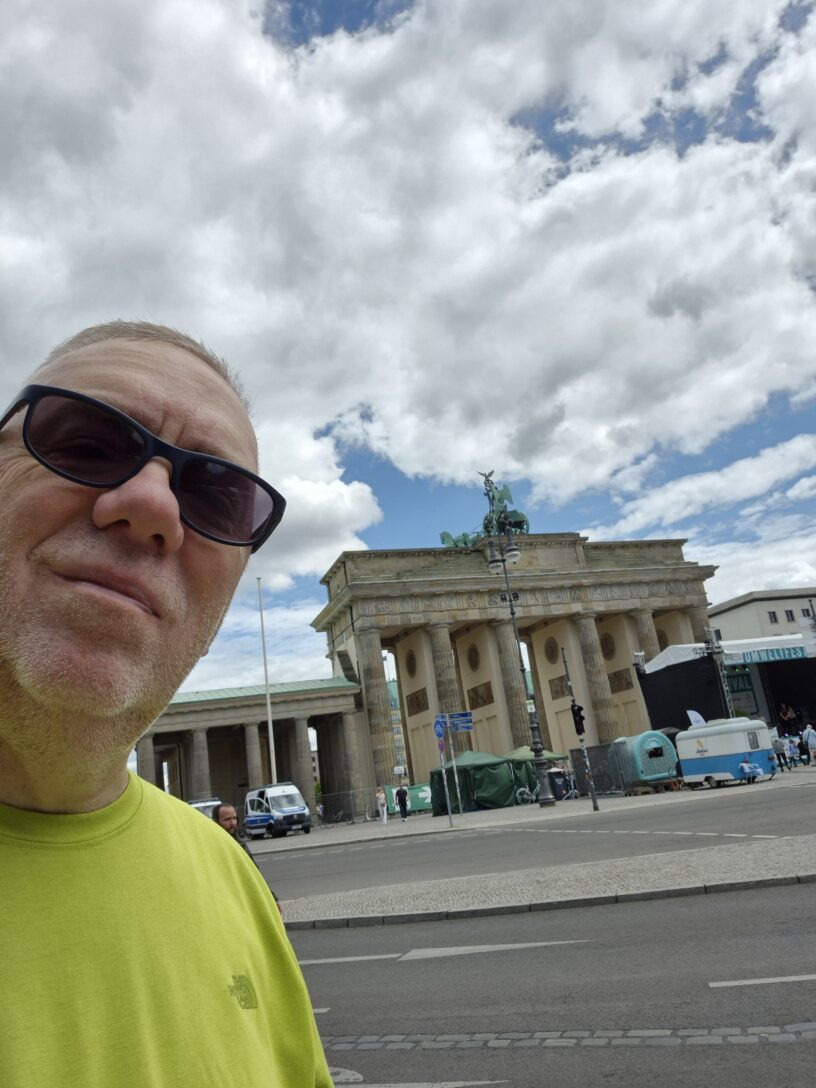
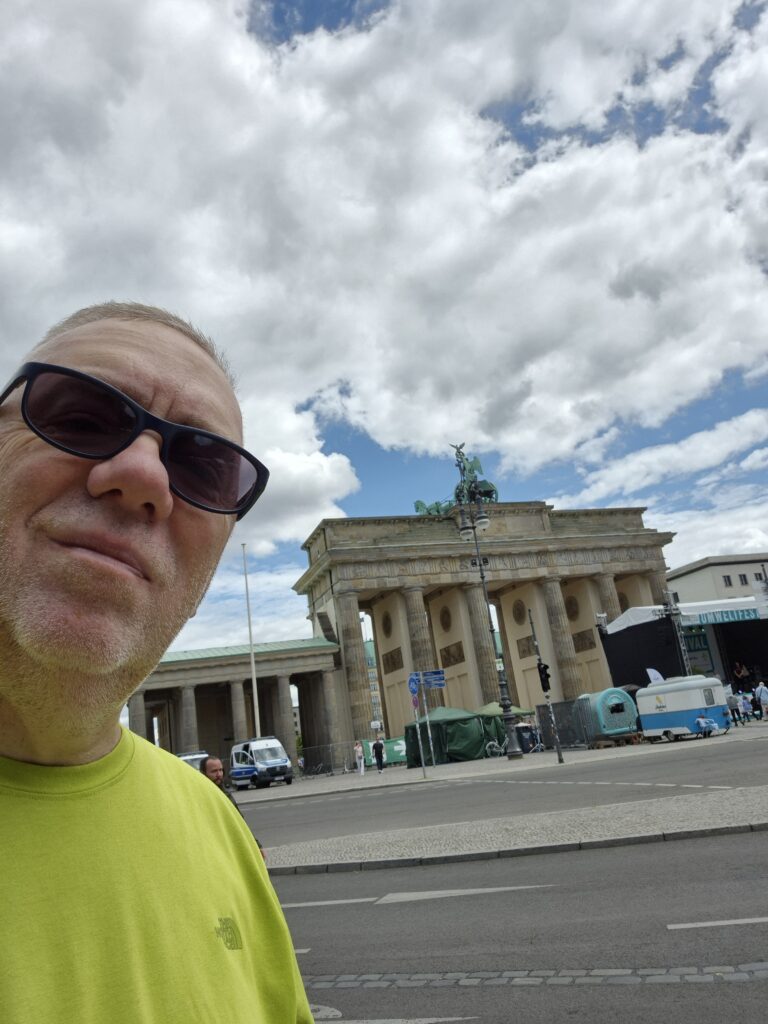
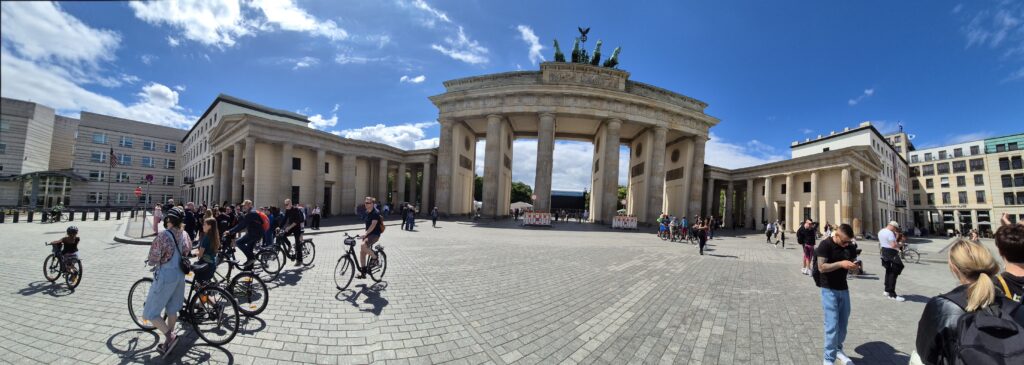
From there I came to the enormous and iconic Brandenburg Gate, something that I’d seen on so many historic images from the Nazi regime and the Soviet division of the city in the late 1950s. Up close, it was colossal, the surrounding area de-cluttered and restored. I’d return here several times during my stay.
Next I headed past the impressive abstract memorial to the Holocaust victims, a huge area comprising a series of concrete blocks of different heights. Further along, I crossed the road to see the memorial to Hitler’s horrific attempts to wipe out the homosexual community, and then down to the massive traffic junction at Potsdamer Platz. Each of these locations was marked by a Virtual cache, and a fantastic example of how geocaching can provide a handy guide to the highlights of a city.
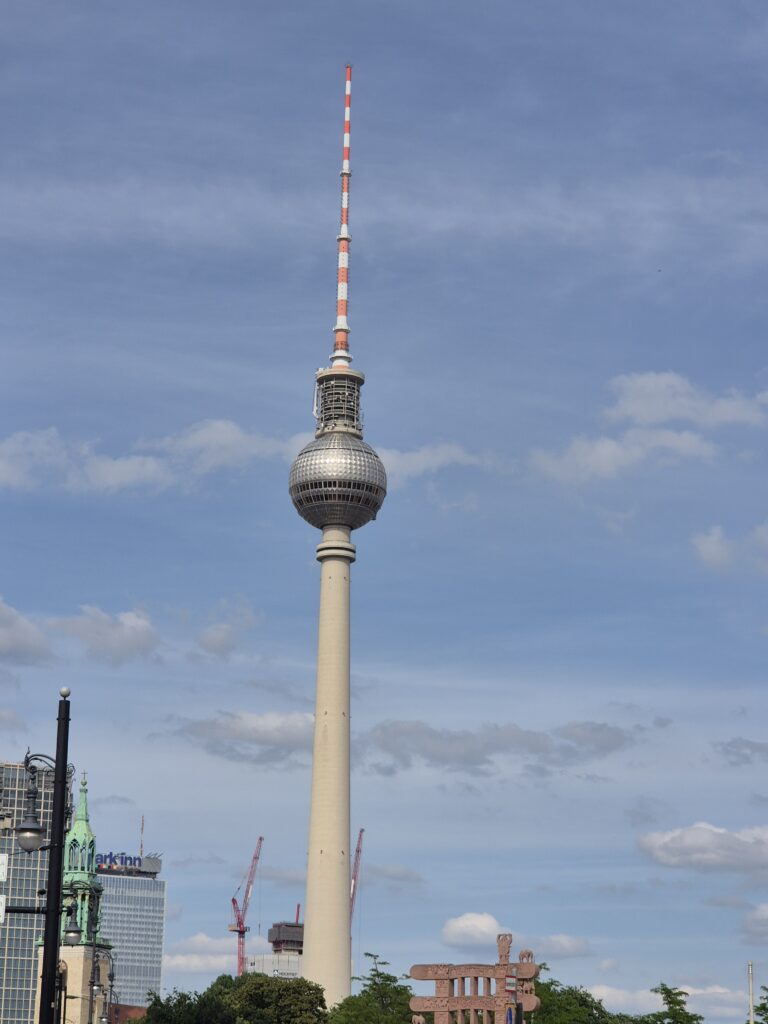
Walking back to meet Jane, I noted some other landmarks that I hoped to visit over the next few days- The Reischtag building which houses the German parliament, the dominating TV tower, another example of Jetsons architecture, and the intriguing World Balloon, close to Checkpoint Charlie. Again, these were all marked by virtual caches.
Another city, another public transport system, so we downloaded the BVG app and took a tram up to our accomodation. After freshening up, we decided to explore the local area, grabbed some food and called it a day.
For our Monday entertainment, we’d spotted another walking tour, but this was with a difference. A musical tour, which promised a song from the guide at each location! The meeting place was right beside the Brandenburg Gate but sadly our host, Axel, was very late and arrived without his guitar, which didn’t bode well.
When we started, we found him to be knowledgeable and quirky. We visited some of the places I’d passed yesterday, as well as the Berlin Wall memorial and Checkpoint Charlie, the only way to cross between east and west Berlin between 1961 and 1989. Although this is now a replica gatehouse, and mainly a tourist attraction, it also provides another reminder of just how much Europe has changed in my lifetime, and another warning against disunity. Another interesting location was an unremarkable car park, above the former site of Hitler’s bunker, devoid of a memorial so as not to create a focus for any form of peverse celebration or pilgrimage.
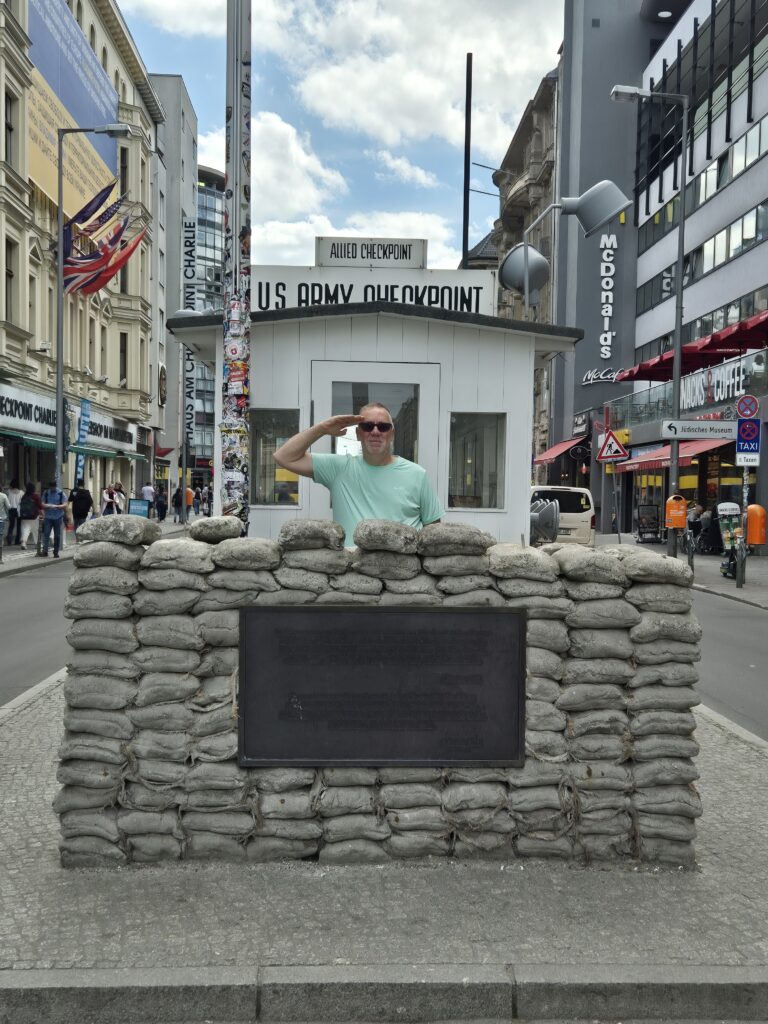
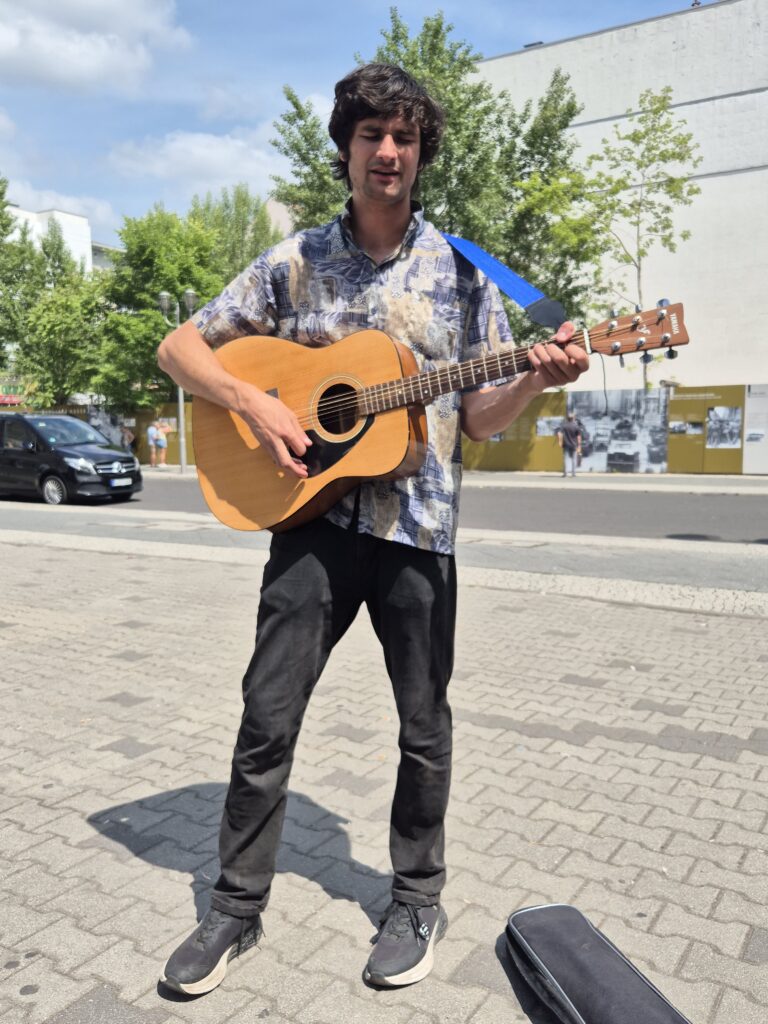
By now, Axel has retrieved his guitar, and entertained us with a number of appropriate songs at the remaining locations. One of the highlights of the tour, if not our stay in the city, was his rendition of Bowie’s Heroes, a story of lovers separated by the wall, performed right against one of the surviving fragments. Extremely moving.
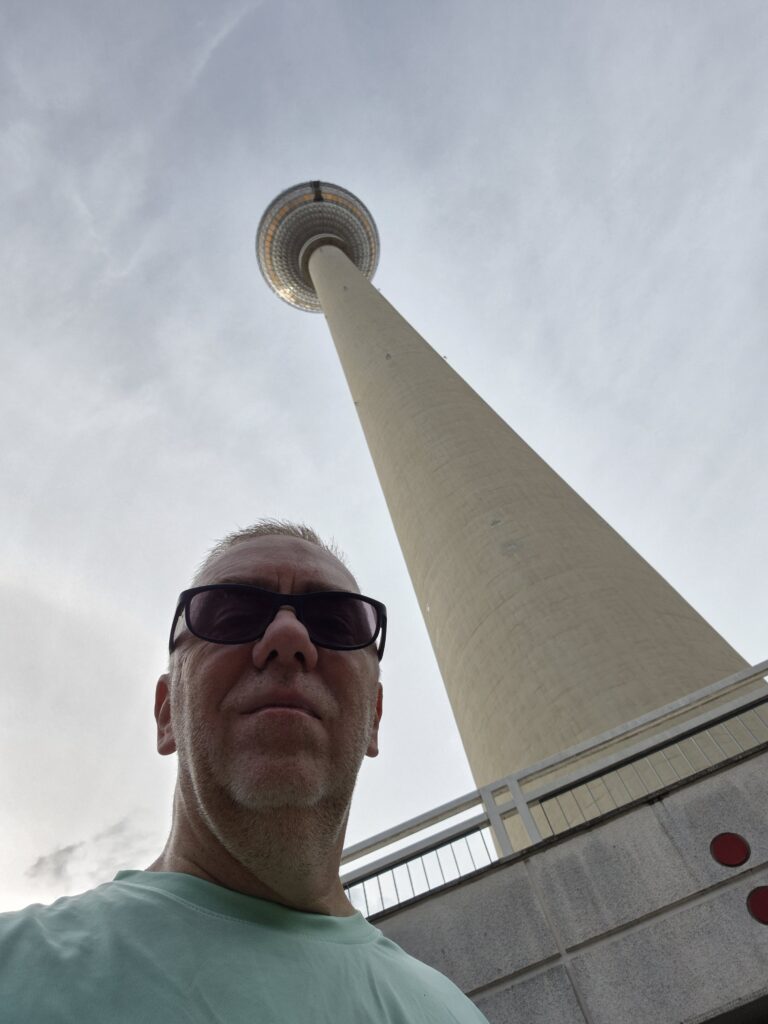
After lunch, I headed off alone for a while, geocaching my way around the city, past the cathedral and the twin domed churches, until I came to the aforementioned TV tower and bought a ticket for a visit to the observation platform. I can’t imagine what the former East Berliners must have thought when they saw this ‘space age’ edifice shooting up in the forbidden part of their city.
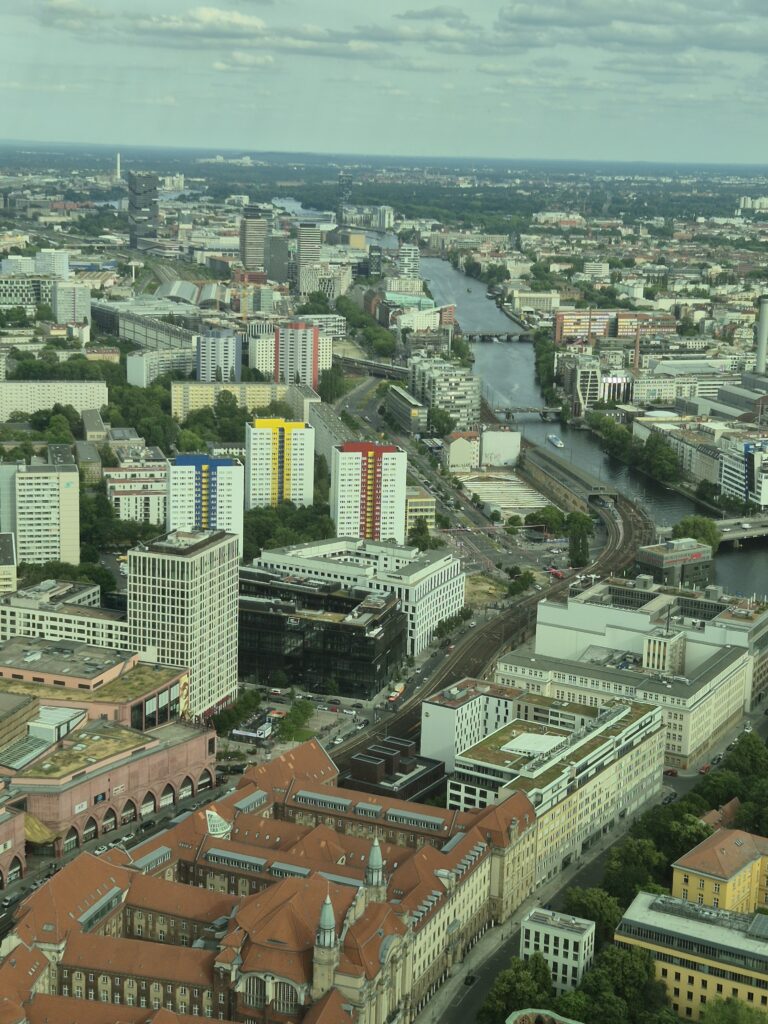
I seem to be drawn to these panoramic viewpoints on this trip, but this was something special. It provided not just a view of the city, but of the whole area around Berlin too. Interpretation boards showed what I was looking at, but also traced the former route of the wall. I’m finding this subject fascinating, especially the topic of reintegration from 1990. How hard must it have been to merge these two divergent cultures after years of violence, propaganda and distrust?
After a couple more Virtual caches, and a traditional right beside the tower itself, I took the underground back up to our apartment before we went out for pasta and a glass of wine at the end of our day.
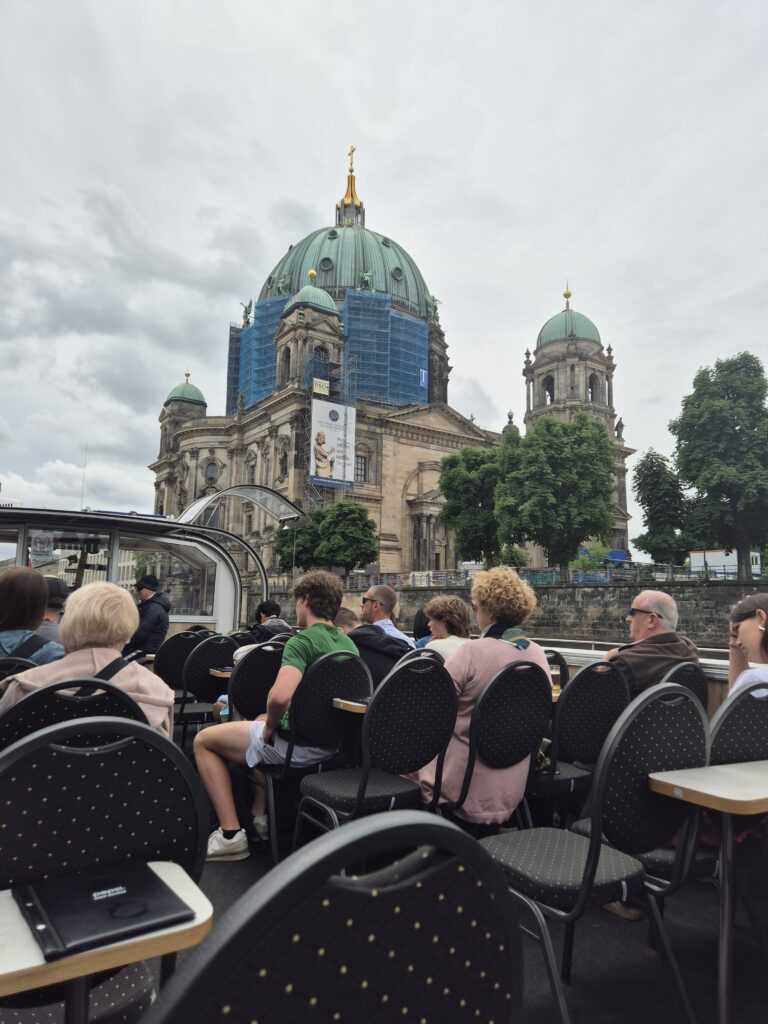
Our plans for Tuesday started with a river cruise. An excellent guide and narrator showed us, as is often the case, a different view of the city, highlighting once again the places where west had once met east, but also focused on the enormous rebuilding programme which had taken place both after the war and upon reunification. We saw embassies, museums, government buildings and galleries, as well as the presidential palace. Always a relaxing way to see a city!
After lunch, we visited the DDR museum, which was both a memorial and a homage to the former East Germany. As well as a detailed overview of the historical events, there were artifacts, personal accounts and photographs, but perhaps the most interesting exhibits were the reconstructions of the places where ordinary people lived. A nursery schoolroom, not dissimilar to my own first school memories in Louth, and a family apartment, with furniture, domestic appliances and bedrooms.
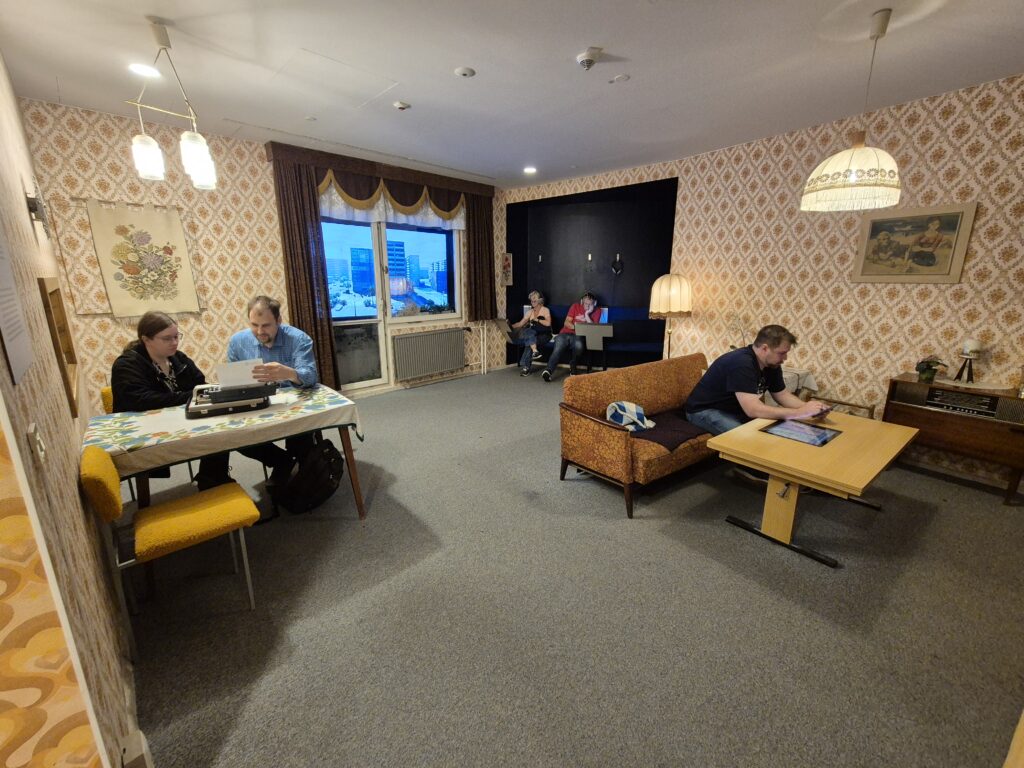
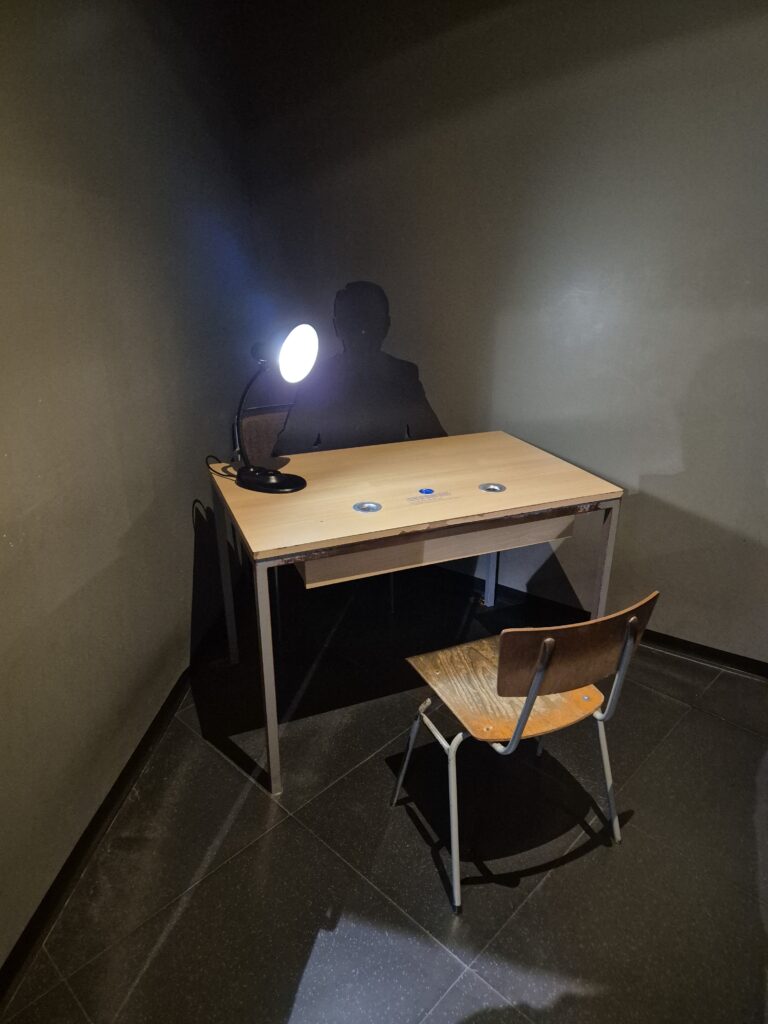
Like the exhibitions in Hamburg, it was sobering to see that ordinary people were just trying to survive and love their families, not wage war and harbor emnity; that was for their leaders. I was reminded of my friends and colleagues in China who were just decent people getting on with their lives. However, there were also reminders of the total control that was held over them, and their lack of their freedom, despite the propaganda. I was also reminded of my visit last year to the KGB museum in Tallin.
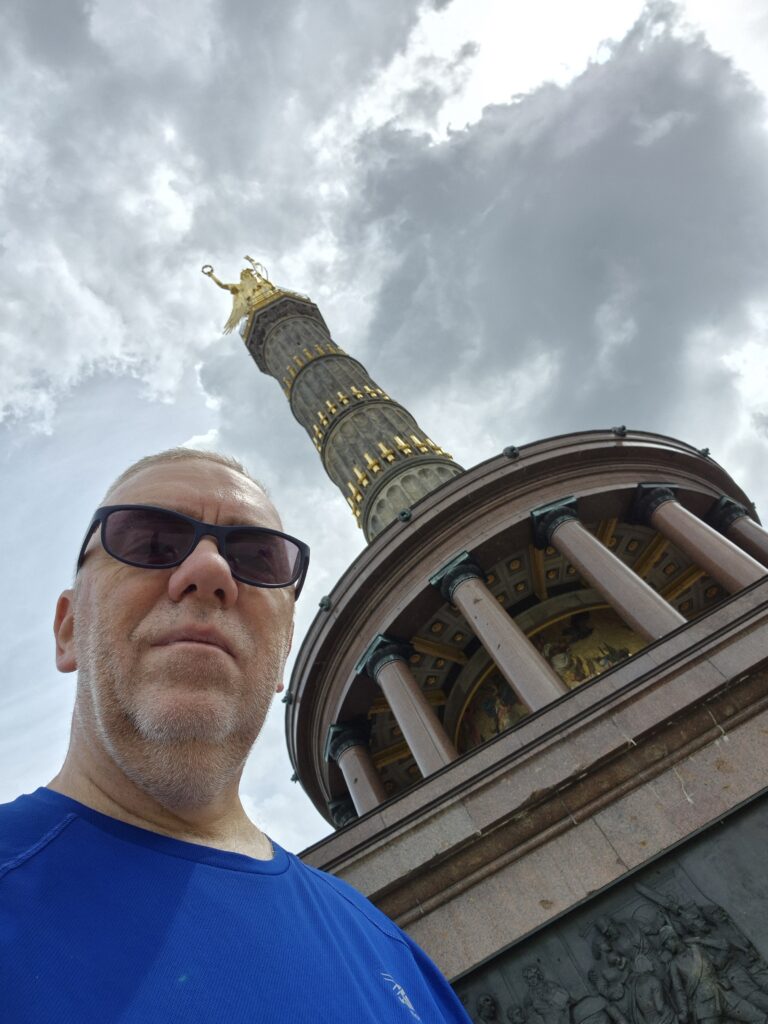
That was Jane’s last full day with me before she continued her own European tour in Paris. The next morning, after saying goodbye, I headed back to the Reischtag and queued to book a visit for the next day. I also decided to have a gentle day so bought a ticket for the hop on-hop off open top bus tour. My first stop was the impressive victory monument with its golden statue. This is another enormous traffic junction and I spent a good half hour here completing another Virtual before jumping back on the bus to continue my tour.
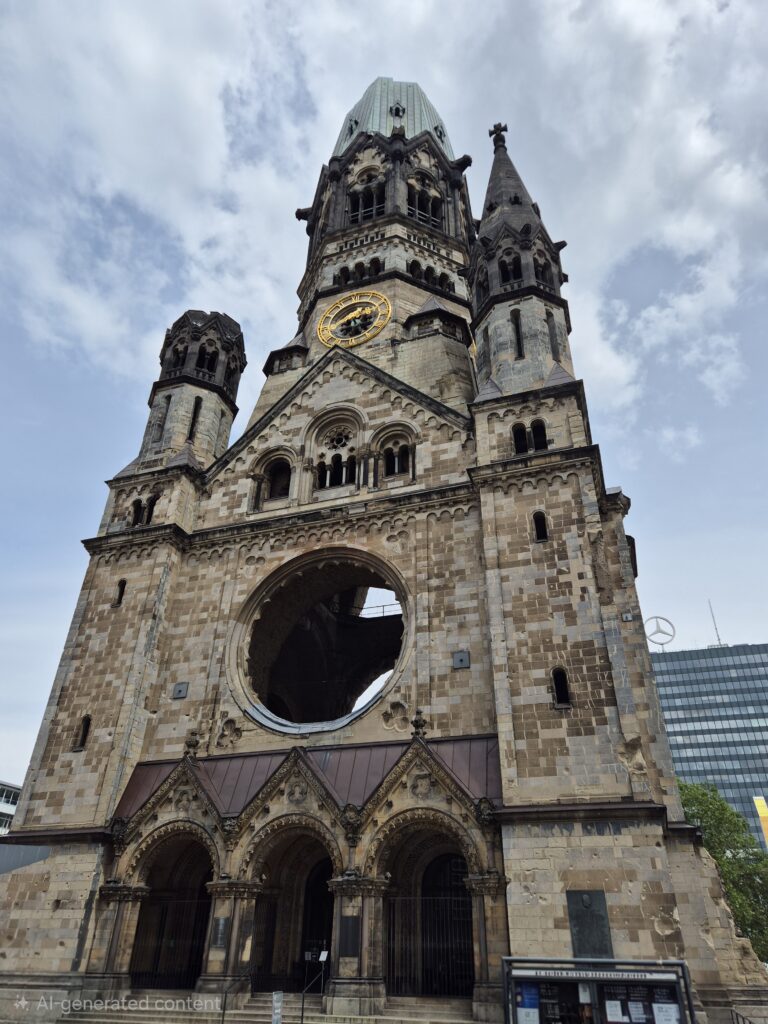
Another stop was the preserved ruins of the Kaiser Wilhelm memorial church, and its modern annexe. This was, again, reminiscent of Coventry Cathedral and the church of St Nicholas that we saw in Hamburg in the way it focuses on forgiveness, peace and reconstruction, rather than on war, victory and destruction.
Back on the bus, I headed where the boat trip couldn’t take me, the Eastside Gallery. Alongside the river, this is the longest surviving stretch of the Wall, used as a canvas by local artists in the months following it’s demise. Several of the panels have become iconic images of the end of the cold war, and so I took some time to walk its length and reflect on the messages it presented.
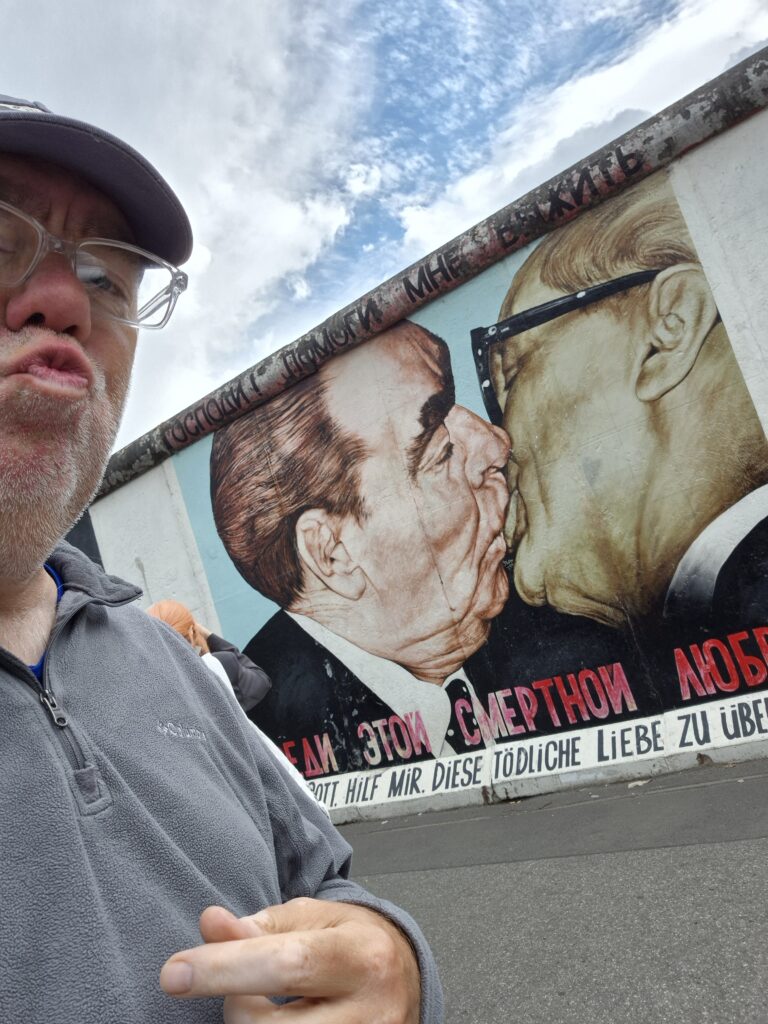
I then discovered that the bus tour finished at 6pm so I took public transport back home and packed my bags ready for my final day in this fascinating city.
As my sleeper train to Budapest didn’t leave until later the next evening, I had the best part of a full day here still, so I took my backpack to a luggage store near the station, and headed for the World Balloon, having bought a ticket online, only to discover that it was closed because of the windy conditions! Instead, I took brunch right opposite Checkpoint Charlie and then took a gentle walk towards the Reischtag, picking up some caches along the way. At the Mall of Berlin, I took the opportunity to get myself another shave, although the Belgian version was far better. Further shave reports to follow!
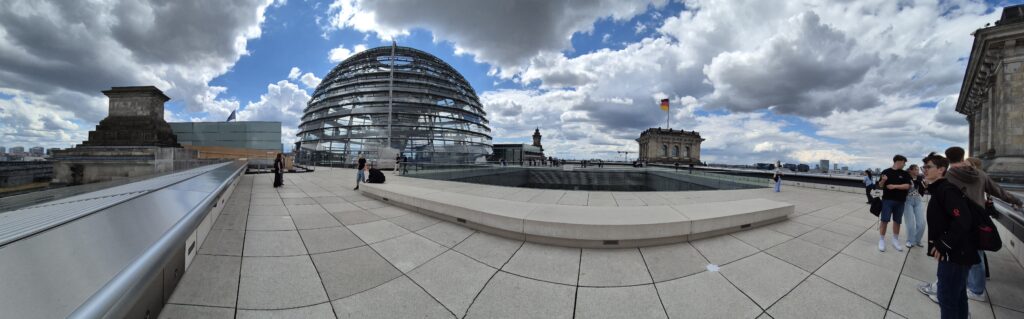
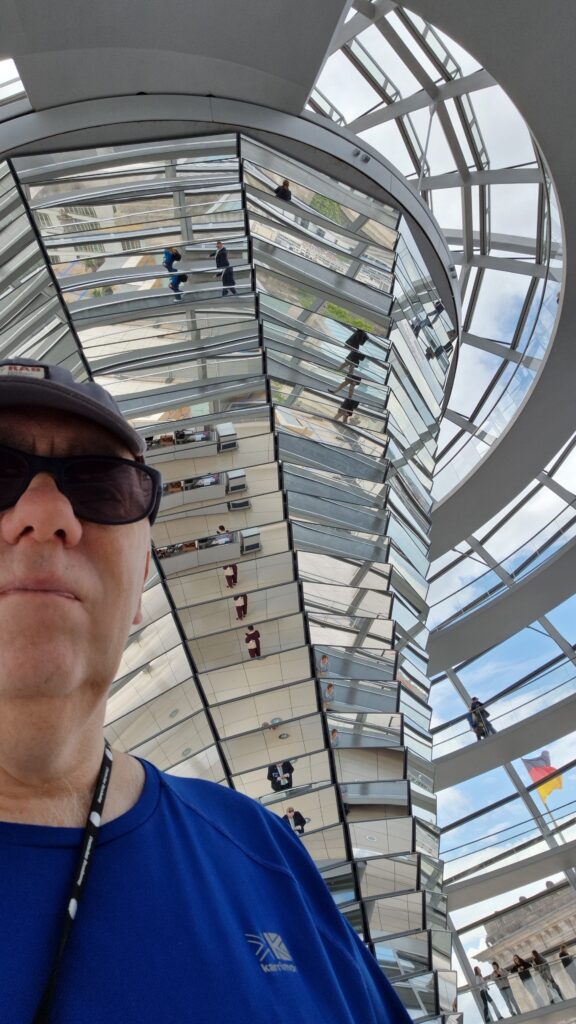
The tour of the impressive glass dome of the Reischtag was fabulous. After the security checks, we took a lift up to the roof terrace where there were stunning views of both the city and the dome itself.
Inside the dome was a very interesting history of the Reischtag building itself through the first world war, the fire attack leading to Hitler’s sidelining of the Bundestag, and then to its restoration following reunification. The spiral walkway to the top level platform included an audio tour and led to a 360° panorama. This was so impressive that I felt better about my cancelled balloon ride!
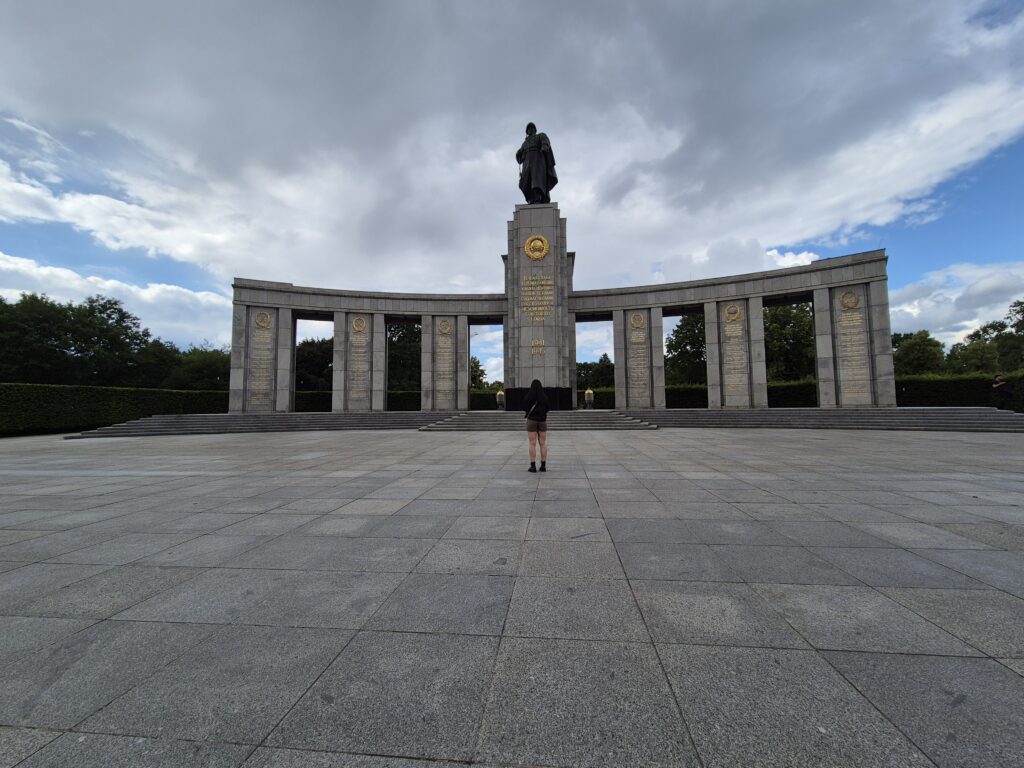
Back down at ground level, I just had time for a walk around the edges of the Tiergarten, taking in the imposing Soviet memorial, where thousands of Russian troops were killed and buried during the liberation of Berlin at the end of the war.
I walked back to the Metro station and collected my pack from the station. Another meal in the Cube, (where my chopstick skills earned me a free cookie!) and it was time to take my first ever sleeper train.
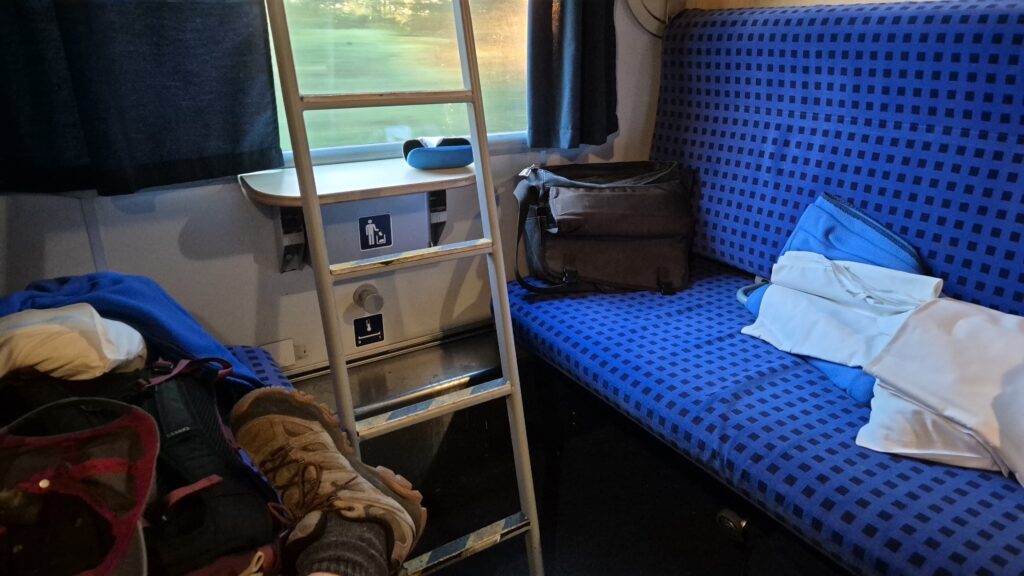
i had no idea what to expect or how it all worked. The train was slightly late, but I soon found my bunk in the couchette carriage, where I was joined by a German couple. Together we worked out how the bunks worked, and attempted to chat until it was time to make up the beds for the night. Although everything seemed quite old and clunky, we had clean sheets and a blanket and I soon got comfy and nodded off. It was, after all, a bit like camping! We were joined by two others at Dresden, making our cabin cramped and sweaty, but I slept well and enjoyed my first sleeper experience.
I’d seen so much in Berlin and could have stayed longer without getting tired of the place. I was glad that I’d spent four nights here, however, but was now heading into unknown territory once again, to Budapest in Hungary.
A Wright
June 2026

Leave a Reply