
Before you throw your arms in the air and call me a revolutionary anarchist (although that’s a fair shout), these are just my own musings designed to stimulate debate, and not a serious call to arms! It’s based on a thought that keeps popping into my mind every now and then. I hope it simulates some sort of debate. If not, I hope it amuses you!
The UK Mega is extraordinary and unique. For over a decade now, a series of disparate groups of enthusiasts have organised a Mega Event for the enjoyment of the UK Geocaching community. Just as when William Hartnell’s Dr. Who morphed into Patrick Troughton’s, no one could have predicted that that first iteration of our Mega could have survived and continued. It would have been entirely sensible to suggest that it might be a one-off, or at best a novelty that players would soon tire of. As discussed elsewhere in these pages, the early days of the game were largely a solo activity for many players. There were far fewer of us and the likelihood of bumping into each other was slim. We now see events and Megas as a key and central part of the game.
But over time that has changed, largely for the better. The rise of the smart phone has led to a dramatic increase in participation. This has brought greater wealth into the game and a subsequent investment in new features. Communication has improved, abated by social media forums. Mega events were no longer big enough and so the dawn of the Giga event broke.
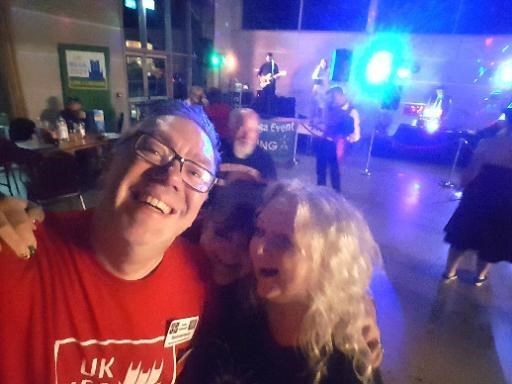
Within the UK, that early style of Mega gradually morphed into what we have today. The typical UK mega is now a week-long festival of geocaching. Camping is felt to be a central feature of the experience, along with a programme of ‘side events’ building up to Mega day itself. Hundreds of new caches are often placed, traders of containers, geocoins and other crafters sell their wares. There are discos, games, live music, children’s entertainment, beer tents and much more.
The UK Mega is awarded in a bidding process, a bit like the Olympics, with interested groups making their proposals on an annual basis, around 2-3 years ahead of the event. Bids are considered by a group known as the Stakeholders which comprises representatives of previous mega events, but each is independent and with it’s own constitution, ideas and aims. However, it’s my belief that the Mega has outgrown this model and that it is is being held back by missed opportunities arising from this disjointed approach. What follows is just a suggested way forward. It is not complete and it is not in any way at all a criticism of the efforts of any past committees or chairs. It is also entirely my own thoughts. It is not in any way connected to my involvement in the Lincolnshire Mega and is independent of any other other group or body. Here goes!
The UK Mega Event should be a charity. This is the basis for much of what else I have to say. A single body overseeing the whole process of bidding, awarding and delivery would provide a stable framework for each year’s event. It would allow for transparent governance, financial prudence and provide continuity and succession.
As with all charities, a Trust Board would be formed. This is the executive body of the charity and would be ultimately responsible for all its activities. It could hold transferable policies on such things as public liability and negotiate long term contracts with certain suppliers and providers. It could develop policies on such matters as equality, diversity and inclusion, among other matters. The board would replace the current ‘Stakeholders’ group (which only really represents one particular group of stakeholders anyway). It should, of course, continue to provide a means whereby the experience gained by previous megas could be saved and made use of. However, there are others whose experience could be invaluable to The Charity, such as volunteer reviewers, the GAGB, the world of commerce and, of course, representatives of everyday geocachers. Some of these representatives would be appointed, others elected or co-opted.
As a registered charity, the Board of Trustees could also attract financial benefits that are currently not being taken advantage of. One of the tests for registration as a charity is that of ‘public benefit’, that is to say, does this body exist ‘for a purpose which is beneficial to the community?’, which Geocaching demonstrably does. Only a registered (or exempted or excepted) charity can claim GiftAid on donations, the HMRC scheme whereby a charity can claim back any income tax paid by the donor on their donations. For many charities, GiftAid represents a significant proportion of it’s income. With the basic rate of Income Tax at 20% this means that every £1 donated is worth £1.25 once GiftAid is added. This is income which would be available to future Megas if it was registered with the Charity Commission.
Additionally, registration could open up other avenues of funding. Many trusts and funding bodies will only make grants to registered charities. Projects such as CITO activities, EarthCaching and the GPS Maze might well lend themselves to grant funding.
Clearly this new Trust Board wouldn’t expect to be running a mega every year! Frankly, having been involved once, I need to sit in a dark room for a good few years before I ever think of doing it again! My suggestion would be that The Charity would provide strategic oversight and be responsible for the bidding and awarding process, while each individual event, once awarded, would form its own committee, in a similar vein to how things are at present. This committee would effectively operate as a sub-committee of The Charity, with clearly defined terms of reference and delegated powers.
Financially speaking, this system might be served by The Charity holding a reserve fund- a ‘float’ if you like, to ensure that work can begin right away on planning the event, rather than fundraising taking place to fund a not-yet-viable Mega. The Charity would also be responsible for distributing any surplus funds according to an agreed policy. This could include both donations to other, relevant charities and to future UK Megas.
There are, of course, as many possible models for future development as there are interested geocachers, and I’m more than happy for you to shoot mine down in flames! However, while I’ve always believed that ‘do nothing’ should always be on any list of options it’s also true to say that if you only do what you’ve always done, you’ll only get what you’ve got.

Tracey Mason
Interesting concept.
Tentmantent
Thanks Tracey.
Angie Brook
Applying for charitable status, with the possible tax and other benefits that would bring, seem like a no – brainer. As does a body giving continuity for insurance, possible surplus funds, funding applications, attracting volunteers and general know-how. I’ve not been on a mega committee but have been a leading volunteer for a geocaching “festival” a few years ago and learnt from experience that there can be financial pitfalls if certain ground rules are assumed rather than properly set out between the parties concerned.
Kim Leonard
Sounds a good concept. A committee to oversee a sub committee, to be there as advisors and support would be good too