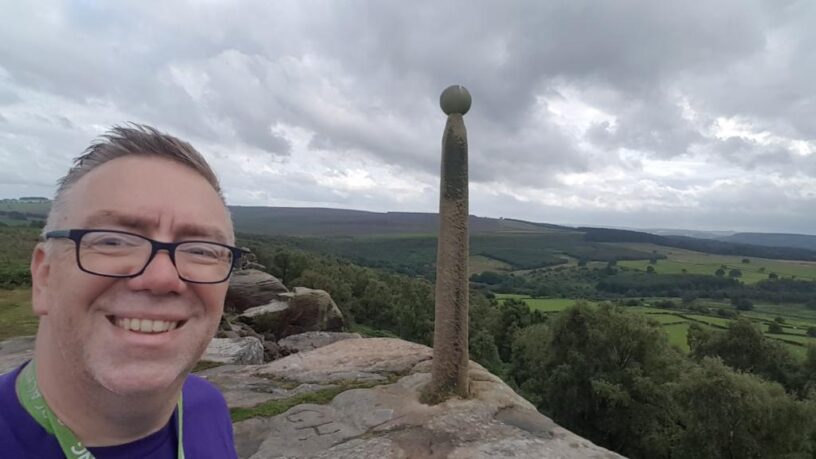



There is little that I enjoy more than a stimulating debate, except, perhaps, stimulating one of my own. This is just a tongue-in-cheek attempt to list a few of my opinions on aspects of the Beautiful Game, mostly exaggerated for comic effect. While there is some truth in what lies below, don’t take any of it (or me) too seriously! Football pundits do it, so why can’t I?!
- Wherigo is the Supreme Cache Type
I love almost all aspects of this game, and all cache types. The simplicity of a Traditional cache, the journey of exploration that a Multi can take you on, the nostalgia of Letterbox Hybrid, and the rarity of a well-placed Virtual. But there’s something about a Wherigo that encapulates aspects of each of them, and more besides. You get more than a film pot under a bench, more than a short walk from a church to a tree, elements of problem solving, interaction with the environment and a spot of technical geekery to appeal to the nerd in me. When I’m planning a day out, a road trip or a holiday, I always look out for a Wherigo in the area, and some of them have been fabulous adventures. I don’t care that it only results in one smiley because, for me at least, quality outweighs quantity.

2. Cheats should be exposed
‘They’re only cheating themselves’ is a refrain I often hear, when discussing the latest round of armchair logging, code-sharing or answer-swapping. Within days of having my trackable tattoo inked onto my leg, its code had appeared on a page of cheater’s website in Holland, resulting in scores of fake discoveries that persist to this day. Like many cache owners, I’ve had my share of suspicious logs, including some from people who seem to be able to cache on several continents on the same day. Some people genuinely forget to bring a pen (although it’s not that hard really, is it?) but there’s plenty of other logs that were written by people who never set foot in the area. I don’t often bother checking log sheets on my caches, but when I have, there’s often been some names missing and I have, on occasion, deleted their logs. I’ve had cachers who, months later, claim to have been with another cacher at one of my EarthCaches and that the answers had already been submitted on their behalf.
But they’re not just cheating themselves. I don’t mean that this is some sort of contest, or that ‘it’s not fair‘. I don’t believe, for example, that their fake logging diminishes my successes. There is no direct link between the two. Their cheating has not resulted in my not being able to solve a puzzle, or find a devious cache. However, when you’ve spent time choosing a special location, making a bespoke container or developing an amazing puzzle, only for someone to claim to have found it from the the comfort of their living room, it smarts somewhat. It makes you wonder why you bothered. Your aim was to provide a challenge for fellow cachers, but someone has now bypassed that and a pointless online click activity. Whole websites and Facebook pages exist with the sole aim of sharing EarthCache answers, puzzle solutions, Multi-cache locations and tracking codes, negating the efforts of countless players.
‘It’s only a game‘- yes, and games have rules. Delete fake logs, deny spurious claims, report the cheats and ban them for life!
3. It’s Fine to Cache During Lockdown
Clearly it’s not fine to drive for hours if the current government guidance says we’re to take just one episode of daily local exercise. It’s also not been fine, at times, to hold gatherings of geocachers, and so we can’t. The UK reviewers did not publish events from the start of the pandemic, and published no caches, other than Mega events, during that first lockdown. Apart from that, things are pretty much open to interpretation .
On social media, opinions are everywhere, are varied and are firmly held. Humanity is seemingly indifferent to issues such as climate change, hunger and self-determination, but would eat its grandmother to make a point about caching during Covid! Twitter and Facebook are rife with opinion at the best of times, but the pandemic has brought out the worst in all of us. Is it boredom, perhaps, that leads an otherwise calm 50-something to be triggered over someone’s mentioning that they found a nano last night? Are we arguing because we’ve nothing better to do? Not content with living the best way that we can in difficult circumstances, are we turning to others, wagging our virtual fingers and making accusations of all sorts? Are we passing on the virus by touching a cache? Do we all douse ourselves in anti-bac gel before, during and after the search? Should we grass-up our friends, like latter-day collaborators?
Yes, we must keep others safe as well as ourselves, but this is not a level playing field. Just as seeing someone in a shop without a mask does not mean they they are some foil-hat wearing anti-vax nutter. People’s needs vary and their situations are diverse. Maybe we should all allow others a bit of slack, let them do the right thing for themselves and for others in their own way. We’re not all in the same boat, but we are all in the same storm. I’m going caching tomorrow.
4. Bring back Webcam Caches!
By the time I started playing the game in 2006, you could no longer place Virtual, Locationless or Webcam caches. Virtual caches, in particular, had got out of hand. Originally devised as a way to bring people to places where it wasn’t possible or desirable to hide a physical container, they had become devalued by being placed at unremarkable places for a range of unremarkable reasons. A virtual at the place where a couple first met, but has no other notable features, becomes just a number on a map, and is as pointless as holding an event in a remote airport just to claim a find in the country (yes, that was me!) This, and other issues, led to the ‘Grandfathering’ of non-physical cache types, as Groundspeak returned to the original spirit of the game- to hide things and for others to find them.
Oh, except for EarthCaches, because they were deemed to be intrinsically educational, not to mention the fact that the EarthCache programme was less of a headache for Groundspeak, because it was overseen by the Geological Society of America and dedicated ‘GeoAware’ reviewers. So that’s ok then.
Oh, and Virtuals are back, albeit in a limited form, due to popular demand and in a controlled manner. They are awarded by HQ rather than developed by individual cachers and so limited in number and easier to police. So that’s ok too.
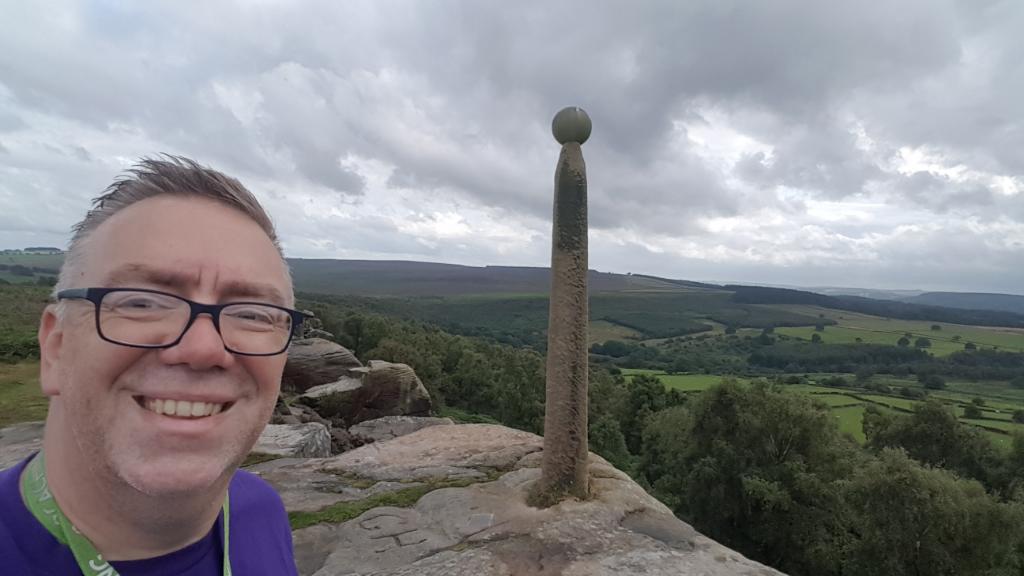
And then there’s Lab Caches and Adventure Labs. The unkind might call them Poundland Virtuals, or Virtual Multis. I like them though, and have enjoyed developing two in my home city of Lincoln. They sit slightly outside of the main geocaching world at the moment, though, although they count towards our overall total finds. And they’re awarded too, so we can’t start doing silly things with them. So that’s also ok.
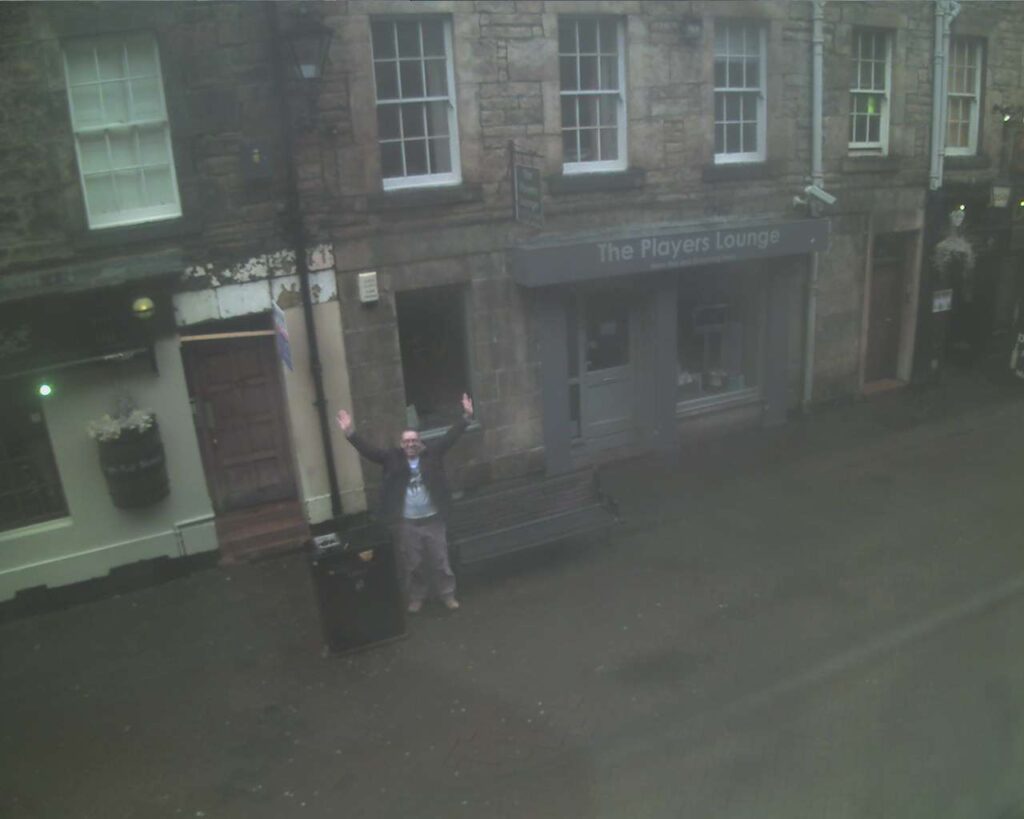
You can see where I’m going with this, I’m sure. If Groundspeak can come up with their own reasons and justifications for reintroducing non-physical caches in these forms, they can surely do the same with Webcams. I love them! I love their re-purposing of something which exists outside of the game for our own ends. While the novelty of seeing live images from the other side of the world may not have the same ‘wow’ factor that it did back in 2000, there’s still something cool about logging in to a cam on Manly Beach to see a friend caching on their holiday. It feels like hacking for beginners. Rules on what you can do with webcams have certainly changed, to protect the privacy of individuals, and the quality of images available now provides far greater detail than it did 20 years ago. Solutions have been found for problems surrounding Virtuals and other Grandfathered cache types, allowing Groundspeak to bend their self-imposed rules. I challenge them to do the same with Webcams
5. Charity work should be embraced
One of the rules of cache placement is that it should not be used to promote a business of a charity/non-profit organisation. You can’t even name a cafe if you’ve hidden a cache near it. I get that; the coordinates and hint should be enough. (I never cease to be amazed by requests for my events to name the pub or restaurant where they’re taking place, when actual coordinates are clearly provided!) But the reason given is that this becomes commercial activity. I can name a pub, for example, but I can’t say that the food is excellent- that’s advertising and therefore not allowed. Similarly, I can hold a tug of war event, but can’t state that its purpose is to raise funds for a local hospice, air ambulance or even for a geocaching Mega Event.
I get that too, up to a point. We all have different priorities and motivations. A cause than might be close to heart of one cacher, might be a controversial issue for another. The UK’s Charity Commission does not disallow competing charities to exist, or even charities with diametrically opposing viewpoints or visions. The main test is that of ‘Public Benefit’, which is, presumably, why Eton School’s charitable status is being looked at so carefully. What we’re left with is a number of well-meaning cachers holding charity events, or charitable activities at events, without specifically saying so. You turn up at an event, only to find there’s a raffle or auction that you didn’t know about. You try to promote a fundraising event aimed specifically at the Geocaching community using EventBrite, or Facebook, because you can’t actually do it on Geocaching.com.
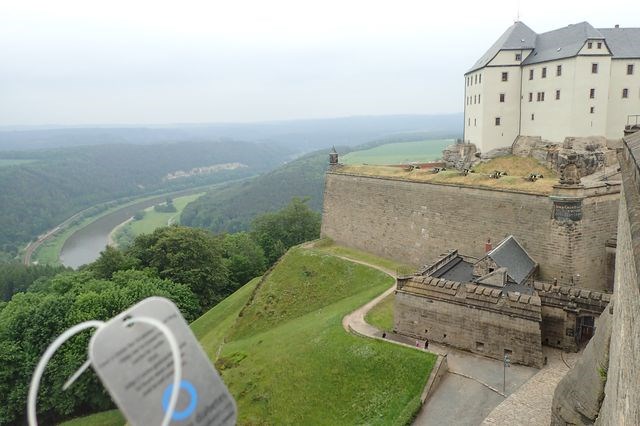
Except that Groundspeak again makes exceptions to suit its own purposes. This isn’t so much a criticism as an observation. Geocoins are regularly made and sold to raise funds for charities. One of the first I found was originally sold to raise funds for a Diabetes support charity; the first I owned raised funds for the victims of the 2011 Japanese earthquake and tsunami. There is no review process for the activation of trackables, allowing for owners to sell and dedicate tags and coins for all sorts of commercial, promotional and charitable purposes
Groundspeak also allows itself to engage in commercial activity in the form of tie-ins with business and culture. A supreme example of this is the Project A.P.E. caches, an entire cache type introduced solely to promote the Planet of the Apes film! Recent years have seen similar trackable promotions with Tin Cup, Mountain Warehouse, Go Outdoors, Magic: The Gathering and Jurassic World. Sponsorship of this nature is likely to be lucrative and thus supports the game, so I’m not criticising these ventures at all. But if rules can be bypassed in some ways, however, then why not in others? What about allowing a Mega Event to name an agreed charity, or local geocaching association to do the same? What about an official Geocaching charity, an international one such as UNICEF, or the World-Wide Fund for Nature? Why not develop one of our own, a Geocaching Charity, overseen by trustees from Groundspeak, GSA and others. And why isn’t the GAGB a charity, so that it can benefit from grant funding, tax relief and other benefits?
I hope that’s provided you with enough stimulation for one day. I also hope that’s achieved a mixture of flag-waving and gear-grinding among you! I’d love to hear your views and opinions in the comments below and maybe you can add a few controversies of your own! Happy Caching!


Leave a Reply