


This article was originally Published in Rockhopper, the magazine of the Open University Geological Society (East Midlands Branch), November 2013
Many of you will have heard of the 21st century outdoor ‘sport’ of Geocaching. Often described as a high-tech treasure hunt, it involves using GPS technology such as a hand held receiver or smart-phone to find a ‘cache’, often a tupperware box or a film pot, hidden by another player at specific location. “Caching” is a fast-growing activity popular with all ages from young families to retired couples.

Caches come in many different sizes and types. There are micro and nano-sized caches, puzzle caches, challenge caches, mystery caches and even extreme caches for the more adventurous. But how many of you have heard of Earthcaching? Earthcaches do not involve physical containers but rather require the cacher to answer questions about an aspect of earth science at a specific location. To claim the ‘find’, a geocacher first must navigate to the designated feature such as a disused quarry, gravel pit or hillside and then find the answers to a few related questions. Although some questions may be simple enough to answer using Google, all published Earthcaches will involve answering some questions or undertaking tasks that can only be completed by actually visiting the site. Some caches involve posting a photo taken at the location to prove that the site was actually visited!
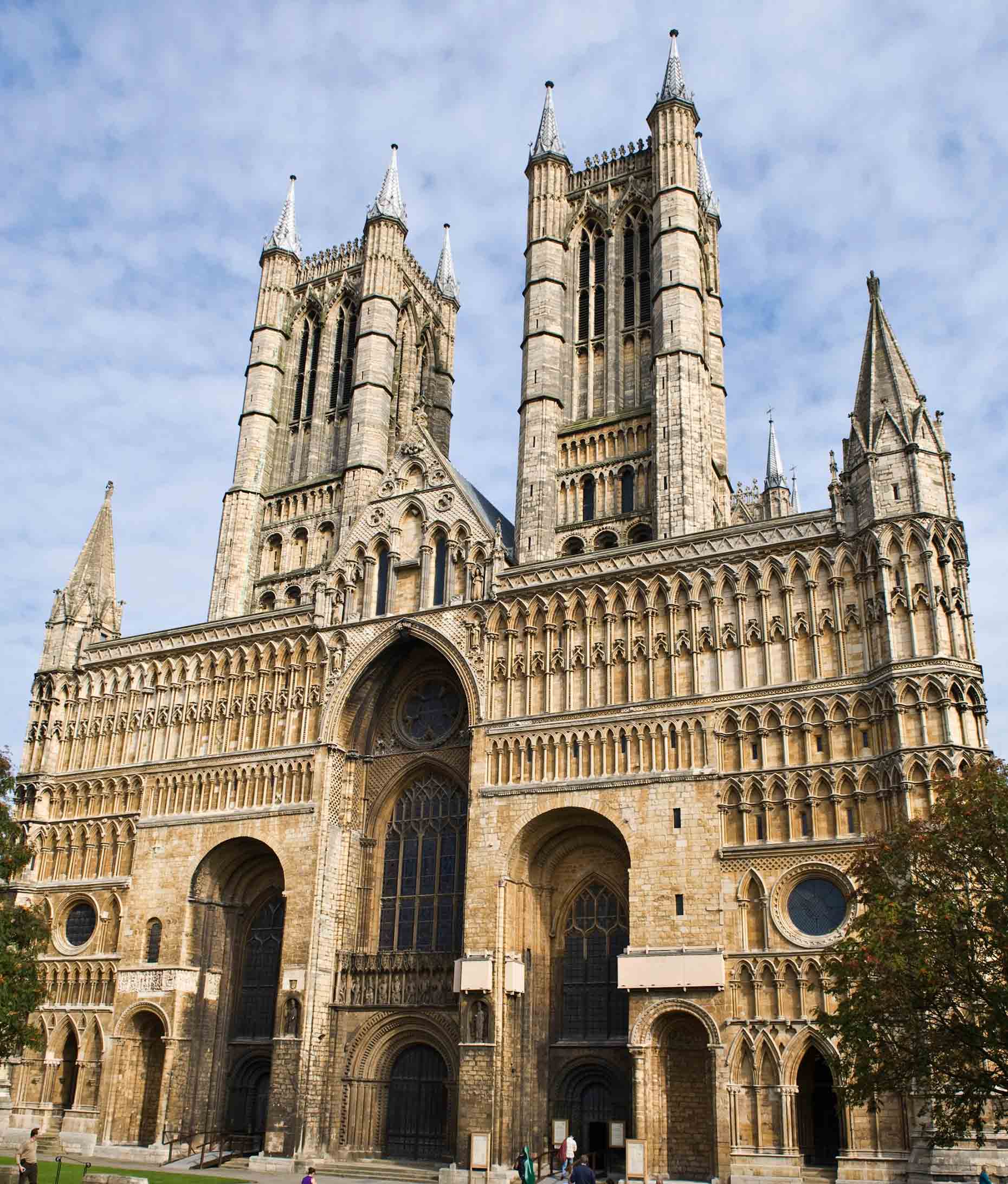
Time for an example: I have ‘placed’ an Earthcache at Lincoln Cathedral which requires the cacher to examine very closely the oolitic limestone from which it is built. The tasks that I have set include giving a description of the ooliths within the stone, their size, shape and colour, the number per square cm and give the type and name of the stone itself. Having done this the cacher then must email me the “cache owner” their answers. If I am satisfied that their responses are reasonably accurate, I will then respond, giving them permission to log their find on geocaching.com, the main website for geocaching and the only one on which Earthcaches can be listed.

Groundspeak, the Seattle-based company that owns and runs geocaching.com has a highly efficient network of volunteers known as reviewers, who check each submitted cache listing before it is published online, allowing other cachers to download the coordinates and so find the cache. In the case of Earthcaches, this task is undertaken by the Geological Society of America, in partnership with Groundspeak. An Earthcache reviewer must ensure that the cache listing includes an Earth science lesson that relates to the given location; that the coordinates are accurate and do not take players onto private property; that the tasks are varied, challenging and can largely only be completed by visiting the location itself.

Groundspeak long ago abandoned the publication of so-called virtual caches (ones with no physical container to find, just a task to perform at the given location), arguing that these were not in the original treasure-hunting spirit of geocaching. However, Earthcaches survived, thanks in part to the fact that most of the reviewing and other associated admininstration is undertaken by the USGA which sees it as a key tool in its educational outreach work.
Earthcaching, like all geocaching, can take players to locations that they otherwise might never have heard of. It can also allow cachers to find places and features that do not feature in any guidebook, map or leaflet. This is, in fact, true of all aspects of geocaching, but in Earthcaching we have a unique, location-based game with which to promote the excitement and mystery that we all find in geology and other aspects of Earth science.
If you are interested in finding out more about Earthcaches, or indeed any aspect of geocaching, here are a few things you can do:
- Visit www.geocaching.com where you can set up a free account providing access to all the features you will need to get started. You can also search for caches, including Earthcaches, near you.
- Visit www.earthcache.org for specific information on Earthcaching. There are also details of ‘awards’ you can claim for finding or placing earthcaches.
- Attend an Event Cache. These are informal gatherings of geocachers, often in a pub, cafe or public park. There is bound to be someone there who can help you – probably me!
- Use social media. There are many local geocaching groups that operate largely through Facebook. In our region there is LincCache (Lincolnshire), GeM (Geocaching Midlands – Notts, Lincs, Derbys, Leics), EmCache (East Midlands) and Nottingham Cachers to name but a few.
- Get out there and find one! After you get into the swing of it you may soon feel ready to place one yourself. Maybe you know just the feature that would lend itself to this that no-one else knows about!
Andy Wright


Leave a Reply