



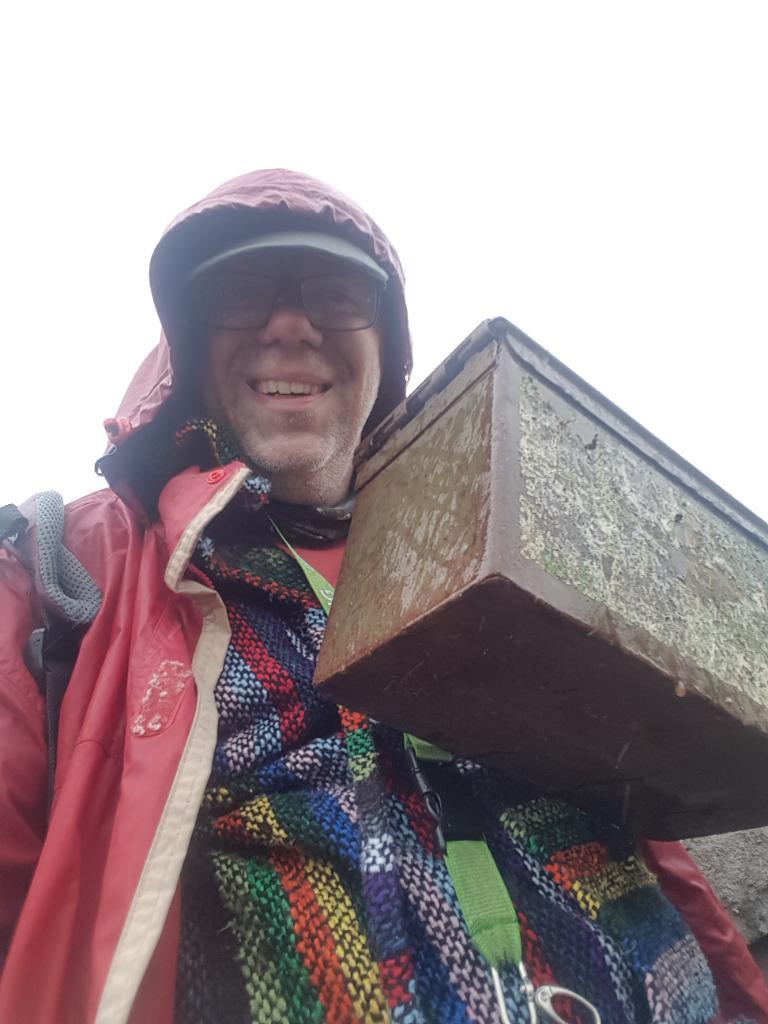
I feel like I’ve been Geocaching forever. I don’t recall what I used to do with my life before I discovered this game. There’s many things that have held a life-long fascination for me, bordering on obsession, and about which I feel comfortably knowledgeable: the Apollo space programme; The Beatles; Dr Who; the works of Douglas Adams. Each of these has come and gone in peaks and troughs, my attention waxing and waning, soaring and diving, as they fight in turn for attention with my career, family, relationships and funds. But Geocaching has stayed pretty constant in my life since it first discovered me in 2006. I’ve grown in knowledge, confidence and experience, discovering new joys and distractions as the years go by, while the game itself remains unchanged and constant, like the eye at the centre of my stormy life.
Or has it?
When I think back to when I began, to those early years, I can now see just how much it has changed and developed, grown and flourished, while I’ve just been along for the ride! Here’s a few of the things that simply didn’t exist when I started- well, not to me at any rate!
Events
When Lil Lottie and I first started caching, it felt like a secret, undercover activity, where we used codenames and were very careful not to be spotted. There was a thrill to walking past something that no-one else knew was there and another to not knowing whether someone you’d just walked past might also be playing the game. The whole thing felt like a huge secret.
But one day, when we were looking for a cache we could walk to, we saw a strange new symbol on the map, just near the Castle in Lincoln. It looked like a speech bubble, rather than a container. We’d ‘found’ a virtual by then so we had seen other icons on the map, but this was new to us. A quick look at the event page told us that this was a get-together of cachers at a certain time and place. It was also described as a Flash Mob event, something I’d heard of but never been involved in. ‘WWFM IV – Cops and robbers up The Steep‘ turned out to be great fun! We were to lurk close to the coordinates until we received a signal, before the fun started, much to the surprise of other passers by. A game of cops and robbers, complete with whistles blowing, was followed by a bingo game where we had to try to meet other cachers who had done or seen different things. That was a great ice breaker, and one which I’ve used many times over the years. There was a log book to sign to say we’d been there, and a talk about the World Wide Flash Mob by the hosts. At another blow of the whistle, we all slunk back into the crowds as if nothing had happened.
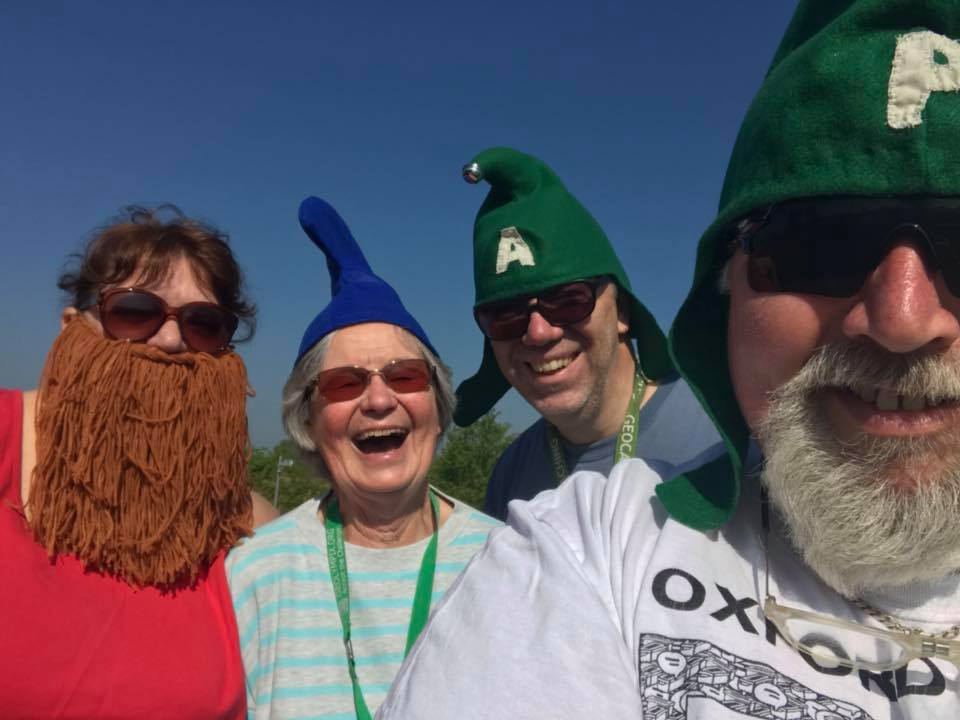
That was the only event I attended that year. I went to one more the next year, and two the year after. They were few and far between back then. I struggled to persude my other half that they weren’t another part of the more dodgy side of the web, and so I didn’t feel able to attend many more. But in 2012, I started looking for events that might be being held in places I was visiting through work, and attended a couple near Nottingham, one in London and then grabbed the bull by the horns and held one of my own in Lincoln one lunchtime and another in a pub while away on a rare camping trip. By the following year I was attending as many as I could and had a whole new circle of friends. Nowadays, at least when not in lockdown, I hold several events a year, attend as many local ones as I can and a couple of Mega events too. I’ve held events in Africa, Hong Kong and Germany. Things have come an awful long way from those underground days!
Series
I remember, in my second year of caching, planning a backpacking weekend in the Lincolnshire Wolds, and noticing that I would be passing three caches on my 30-odd mile route. This was amazing! Until then, I’d only gone out to find individual caches. A day out might be built around a single cache. In fact, it was more likely that finding a cache would be a minor feature of a day out rather than the reason for the trip itself. This was largely because there were so few about; three in the same walk seemed incredible! This still weasn’t a ‘day out caching’, but it certainly broke up the weekend. I set to researching each of the caches. I printed off the cache pages from the website, and cut them up into postcard-sized summaries which I then laminated. I kept them in my map pocket until I knew I was close to the location, before switching on my GPSr and pulling out the card. I found all three and each felt like an amazing achievement!
As time went by, it became possible to find five or six in a small area, and these became known as a series, even if they weren’t placed as such. Eventually, it even became possible to have a day out with the sole aim of finding geocaches, and only having to travel to a particular area- the map was filling out! Fast forward to 2014 and I found 92 on foot in a single day. Last autumn I finally found over 100 in a day. My first 100 finds had taken me over a year and it had felt like an astounding accomplishment!
Favourite Points
Leaving a log was the only way of leaving feedback, when I started. When I placed my first cache, I couldn’t wait to read each log as soon as the email notification arrived. As there were so few caches around, so also there were far fewer logs to read, although they tended to be longer. After a long walk these days, with maybe 20 or 30 caches to log, it’s perfecly understandable that logs are shorter and full of abbreviations and acronyms. I don’t remember when I first saw ‘TFTC’ in a log, but it wasn’t common when I started. Sometimes that’s all I get nowadays, although I know of people who take pleasure in writing a long log, and often find themselves with an ensuing backlog. Mobile phone apps have introuced the concept of ‘live logging’, usually with shorter logs.
However, there’s something enjoyable about awarding a ‘Favourite Point’, something instant and positive. The first time they appeared, I was retro-awarded one for every 10 caches I’d found, giving me hundreds to play with. I was a bit free and easy with them, as you can imagine. I try now to keep around 20 or 30 in the bank, although after completing a few fine series I sometime find myself with only two or three spare. Some friends never seem to give them out- maybe I’m just more easy to please. I like the way they can be used as a measure of a cache’s quality too. A two year old cache with over 50 favourite points is likely to be a good one, and so I often look for highly-favourited caches when planning a road trip!
Apps and paper-free caching
Planning a day’s caching was, and still can be, a time consuming labour of love. With my first GPSr, which even predated USB technology, each cache had to be loaded individually, and the only data transferred was the coordinates. A print-out of the cache page had to come too, including the description, hint and any other information. Sometimes, if in a hurry, I’d write down the basics on a scrap of paper or in a notebook. The on-screen display just had an arrow pointing the direction and giving the distance to the cache. No maps, no navigation aids, and certainly no live links. I don’t think I even owned a mobile phone at the time! Logging could only be done when you got home, and maybe not for a couple of days after that. I’m sure some of my early finds were logged on the wrong date, but that didn’t seem to matter. Nipping out for a quick find just wasn’t possible!
Like many others who began in those days, I still prefer to cache with a GPSr, unless it’s an unplanned trip, such as a FTF hunt. I like the robust nature of these devices, their battery life and, at least in rural settings, their accuracy.
Social Media and Podcasts
As with many hobbies, especially niche pastimes such as ours, Geocaching has spawned a wide ride range of websites, Twitter feeds, Facebook pages, Facebook groups, YouTube channels, blogs(!), vlogs and podcasts. Can you imagine being a new geocacher without access to all the help and advice that’s available out there today? Well I had to, and that’s probably one reason why I was so slow in the ‘old days’!
‘It’s not there!‘- that was pretty much a summary of many of my early searches. Because my first cache was a clip-lock box, I expected them all to be and so didn’t see them. As it dawned on me that hiders were a little more creative than that, I began to realise that I’d just not been looking hard enough. I’d thought that the challenge was getting to the coordinates, whereas that was often just the start of the hunt! I learned this by trial and error, by stumbling upon clues, through the kindness of other caches.
When I started meeting other cachers and attending events, my understanding really picked up; our discussions and explanations led to new ideas for hides. Around ten years ago I began to get into podcasts and my education became an international one. My preference has always been for the more ‘magazine’ style pods, such as Podcacher and The Podcache Show, but I also enjoyed the geekiness of GeoGearHeads , The Geocaching Podcast and Geocache Talk. Facebook became a big part of the game for me, making contact with other players easier, coordinating events and discussions more efficient and all sorts of sub-niche pages kept me amused. There are groups for almost every aspect of the game- for hiders, searchers, puzzlers, coin collectors, cheats, photographers, moaners, climbers, parents, dog-owners, campers, coders and modellers. There are live tweet ‘events’ such as the UK Geocaching Hour , vloggers like Joshua Johnson and Instagram boards like I <3 Geocaching. There is more information and support out there than you could ever need or have time to use. Sites like Project_GC, tools like GSAK and apps like TBscan…
How did I ever find anything?
New cache types
So there were these boxes hidden out there. You load up your GPSr, follow the arrow, sign the log, look for the next one. That was it. Oh wait, there’s this thing called a Virtual cache,that looks interesting! I gained confidence and had a go at a muti-cache which seemed so complicated back then! A mystery cache too, although they were way easier than they are now. That was pretty much it. There were letterboxes, events, webcams and Earthcaches, but not near me. Not yet, anyway. Then, every year or so, I’d hear of these exotic cache types that I could never achieve- Project A.P.E., Lost and Found events- even the HQ in Seattle was a type of cache, and they held a Block Party event cache every year! And then other cache types started to appear, such as Lab Caches, Mega events and Wherigos (the supreme cache type, in my opinion, but that’s for another time!)
Geocoins and Travelbugs
I remember seeing the word ‘Travelbug’ on peoples logs in my early days, without really knowing wheat they were. I’d looked them up but still didn’t really understand how they worked or what they really looked like. Then I noticed that one of the (few) caches I had lined up for another backpacking weekend near Grantham, was showing a Travelbug listed as being in the cache. This was Honington Hill Fort. (It was placed earlier that year, and is still going strong in 2021!) I stashed my backpack behind a wall before heading up the hill. The cache was easily found and there among the other bits and pieces was a shiny metal dog tag token with a scarab logo engraved on one side. The first time I’d seen one in the wild, as it were. Such a thrill! My log for that find reads as follows:
“Beautiful day with wonderful views from the top. Found the cache quite easily. I took a diversion from my 3-day-hike from Byards Leap (on the A17) to Rutland Water along the Viking Way. This was a welcome excuse to hide my pack behind a hedge and stroll unburdened up the hill. Left some Dr Who trading cards (specially gifted by my youngest daughter for this purpose!) and took the travel bug -my first! The sheep were very suspicious of my actions…!”
No online logging remember, and no smart phone either, so it wasn’t until I was home at the end of the weekend that I logged in to the geocaching site to find out all about it. I discovered that the number on the side was unique to that TB and allowed it to be tracked from cache to cache. I eventually discovered how to log the TB as having been picked up, that each TB had a ‘mission’; this one simply wanted to travel and ‘see’ places. It has certainly done that! Over 14 years later, this TB has travelled over 53,000 miles, including trips to Dominica and Mauritius! This is what I had to say about it back in October 2006:
“My first travel bug! I promise not to keep hold of it too long but want to wait a few days until I get the chance to take it further than just down the road! From Honington the bug walked with me down the Viking Way to Rutland Water over the next 3 days. When I got home it came to work with me at the Old Palace near Lincoln Cathedral. Bit of culture never did a Travel Bug no harm!”

Fast forward to 2021, and trackables are a major part of the game, and have spawned a parallel hobby, the collection of Geocoins. It would be hard to believe back then that the descendants of these exciting little travellers would one day be considered so valuable that their owners wouldn’t actually release them into caches at all, just keep them in their personal collection for others to admire and swap. It wasn’t unusual then to find a geocoin in a cache, waiting to be rescued and moved on; it’s almost unheard of these days.
I have a healthy collection of over 200 coins and souvenir tags. I have about 30 or 40 TBs out there travelling, including one called ‘Patch’ which has now been to every continent except Antactica (can anyone help with that?!), has travelled over 108,000 miles, has visited the A.P.E. cache in Brazil, the Falkland Islands and the Victoria Falls!
I know of many other geocachers with a far more impressive collection of coins than me, many with several thousand available for others to ‘discover’ but not for travel. There are dozens of coin designers and traders, collectors and enthusiasts. Every Mega attracts tables full of TBs from around the world, all hoping for a boost along their journey. Some of these are very imaginative creations, some are in a race with other TBs, or on a specific mission; some are huge! Whether you enjoy this aspect of the game or not, it can’t be denied that trackables have become a major part of the game, a fundraiser for Megas and charities and, to some at least, an activity which has eclipsed the central elements of the game of Geocaching.
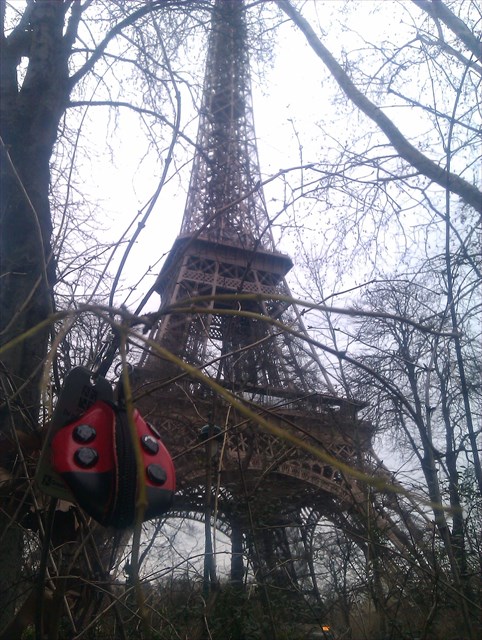
It’s amazing to thing how much has changed in this game over the 20+ years since it was first thought of. In many ways it’s become unrecognisable in both scope and size from the simple treasure hunt that first inspired me back in the summer of 2006. But at its heart, it is exactly the same: someone’s hidden something- go and find it!
Well go on then!

Tim Wright
Excellent, encapsulates the evolution and development of this fascinating hobby and your passion for it. Maybe I’ll give it a go – Sue has expressed an interest ! I could combine it with my loves of country rambling and looking round churches ( 313 of Simon Jenkins’ 1000 best English churches visited at last count) .
Tentmantent
Cheers Tim- happy to show you the ropes some time!